Written by the SoccerGuidely Editorial Team. Covering soccer rules and history for American fans ahead of the 2026 World Cup. Last updated: July 2026. Verified against IFAB’s historical archive and Laws of the Game.
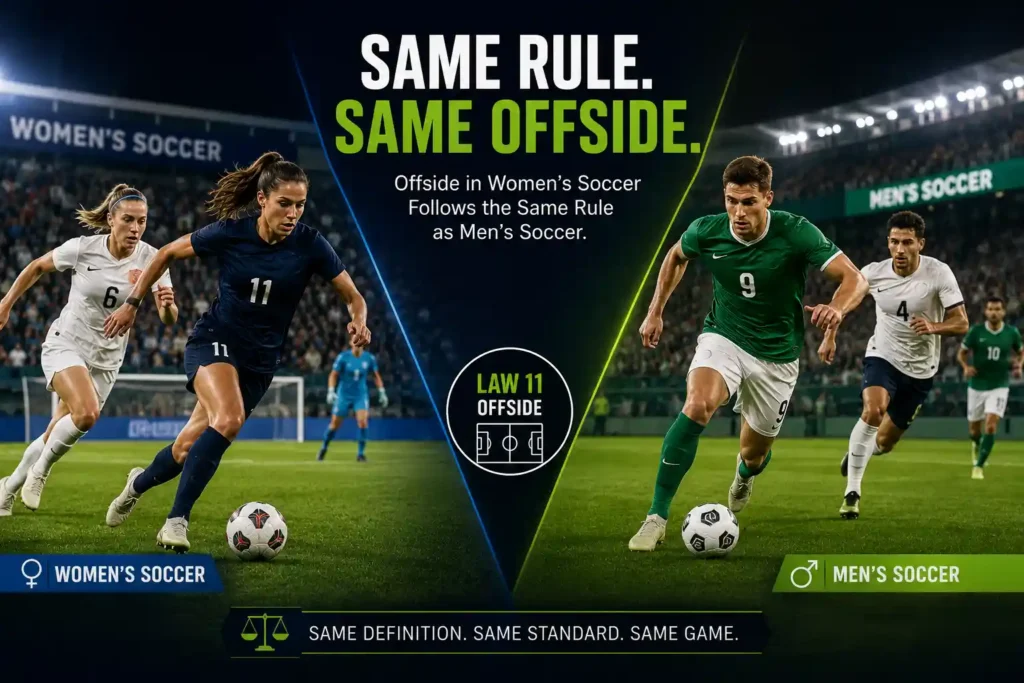
Offside in women’s soccer works exactly the same way as it does in men’s soccer. Both are governed by the same Law 11 of the Laws of the Game, set by IFAB, soccer’s international rule-making body. There is no separate rulebook, no different distance requirement, no altered timing rule. A player is offside under the identical standard regardless of which league or which gender is playing.

You just finished watching a USWNT match and the offside rule finally started to click. Then an MLS game comes on an hour later, and part of you wonders if you need to relearn everything from scratch.
You don’t. Offside in women’s soccer works exactly the same as offside anywhere else in the sport. No separate rulebook. No simplified version. Nothing to relearn.
Is the Offside Rule Different in Women’s Soccer?
Let’s just settle this right away. No, the offside rule isn’t different for women’s soccer. Same rule, same rulebook, same exact standard applied by the same governing body. If you’ve ever wondered whether NWSL or USWNT games follow some separate or simplified version of offside, they don’t.
That might seem obvious once you say it out loud. But it’s a genuinely common question, and honestly, a fair one to ask.
Why Do People Assume the Rule Might Be Different?
Most confusion comes from other sports where men’s and women’s rules genuinely do differ, like basketball’s shot clock and three-point line, an assumption that simply doesn’t carry over to soccer.
A lot of American sports fans have grown up watching leagues where men’s and women’s versions of the same sport actually do have real rule differences. Basketball is the most obvious example, the WNBA and NBA use different shot clock lengths and different three-point line distances. So it’s a completely reasonable assumption to carry over to soccer.
Soccer doesn’t work that way, though. Under Law 11 of the Laws of the Game, IFAB, the body that writes soccer’s rulebook, maintains one single standard that applies to every level of the sport worldwide. Men’s, women’s, youth, professional, amateur, all of it. Offside isn’t interpreted differently based on who’s playing.
We’ve noticed this exact question come up constantly in comment sections and group chats, usually phrased as some version of “wait, is it easier in the women’s game?” It’s not a bad question to ask. It’s just one that soccer, unlike a lot of other sports, has a genuinely simple answer to.
It’s also worth naming something directly. A fair amount of content aimed at women learning soccer tends to over-explain, over-simplify, or lean on gimmicky framing that assumes the reader needs things dumbed down specifically because they’re a woman. That’s not what’s happening here. The rule is genuinely the same, and explaining that clearly doesn’t require any special tone.
Here’s a quick side-by-side, since seeing it laid out tends to settle the question fast.
| Category | Men’s Soccer | Women’s Soccer |
|---|---|---|
| Governing rulebook | Law 11, IFAB | Law 11, IFAB, identical |
| Position standard | Level with 2nd-to-last defender | Level with 2nd-to-last defender, identical |
| Timing of the call | Moment ball is played | Moment ball is played, identical |
| Exceptions (throw-ins, corners, own half) | Same three exceptions | Same three exceptions, identical |
What most fans don’t realize is that while the offside rule itself is identical, the frequency of razor-thin, controversial offside calls can genuinely look different between men’s and women’s matches, and it has nothing to do with the rule being applied differently. It comes down to tactical trends. Historically, a higher proportion of men’s top-flight teams have leaned into extremely aggressive, high-line defensive systems paired with fast, direct attacking transitions, which is exactly the tactical combination that produces those millimeter-close, toe-margin offside calls.
Women’s soccer has plenty of teams running high lines and aggressive traps too, that part isn’t different either, but the average tactical tempo and frequency of high-risk through-ball attacking sequences has statistically trended slightly lower across many top women’s leagues, which naturally produces fewer of the ultra-marginal calls that generate viral controversy. This is a tactical pattern, not a rules difference, and it’s exactly the kind of nuance that gets lost when people assume any visible difference in how a sport plays out must mean the rulebook itself is different.
How Does the Offside Rule Actually Work, No Matter the League?
A player is offside if they’re closer to the opponent’s goal line than both the ball and the second-to-last defender at the exact moment a teammate plays the ball. That’s the standard. Whether you’re watching a USWNT friendly, an NWSL regular season match, or a men’s Premier League fixture on a Saturday morning.
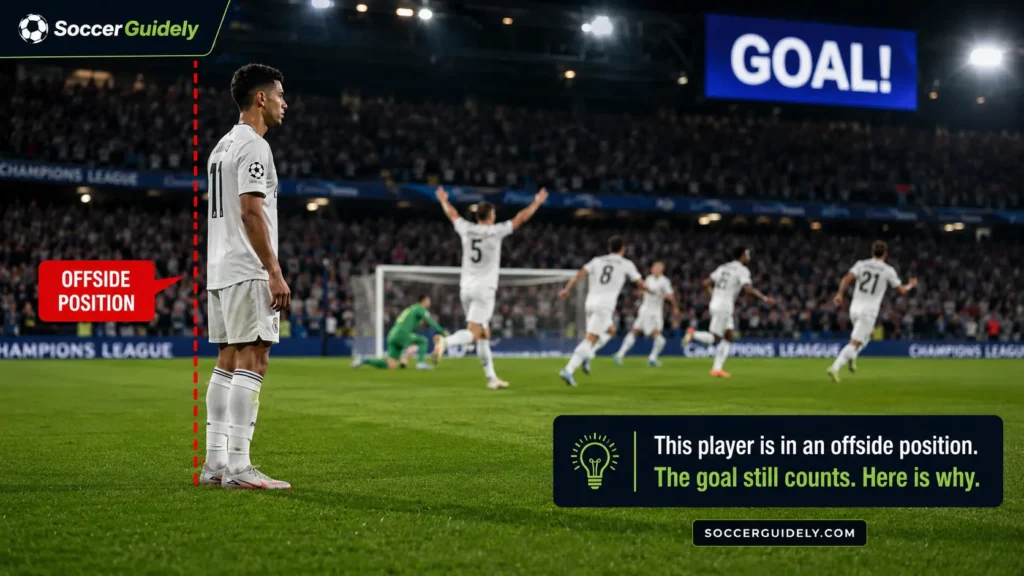
The exceptions are identical too. A player can never be offside in their own half. There’s no offside from a throw-in, corner kick, or goal kick. Timing is judged at the moment the ball is played, not when it’s received. None of this changes based on which league or competition you’re watching.
Look, a common mistake people make here is assuming that because women’s and men’s soccer sometimes get talked about separately in the media, that separation must extend to the actual rulebook too. It doesn’t. The commentary, the coverage, the pay structures, sure, those differ in plenty of documented ways. The Laws of the Game themselves don’t budge an inch.
What Does This Look Like in a Real NWSL Match?
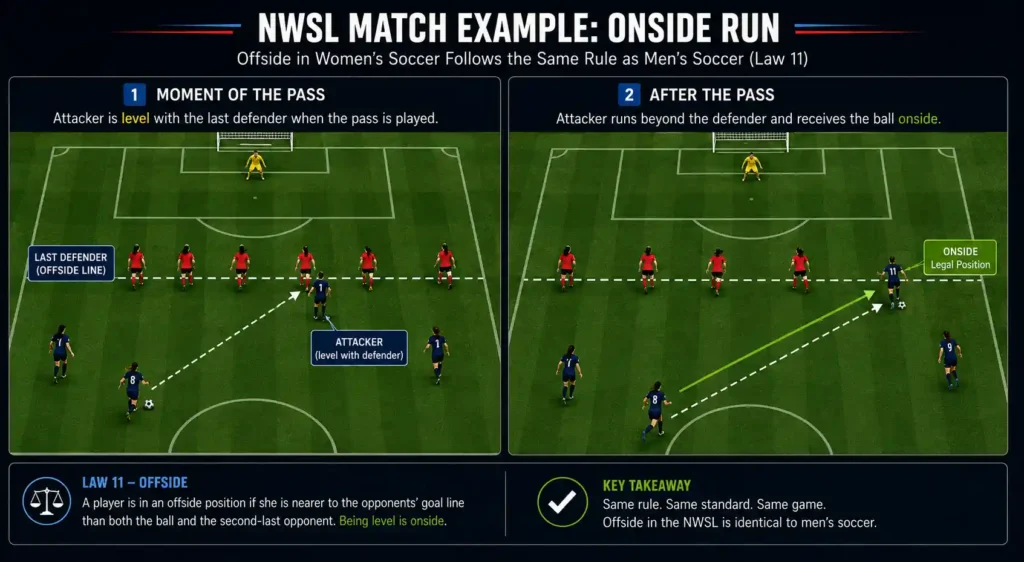
Picture an NWSL match. A forward times her run perfectly, staying level with the last defender right up until her teammate plays a through ball. The moment the pass is made, she’s legally onside, then she sprints past the defense and scores. That’s a perfectly legal goal, judged by the exact same rule that would apply in any men’s match anywhere in the world. There’s no separate standard being applied because it’s a women’s league. It’s just soccer.
Does Officiating Technology Work the Same Way Too?
Yes. The exact same semi-automated offside technology, tracking systems, and officiating mechanics apply equally to men’s and women’s matches, with no separate or simplified version for either.
According to FIFA, semi-automated offside technology tracks 29 data points per player at 50 times per second, and this same system, first deployed at the men’s World Cup, has already been used at recent Women’s World Cups, applying the exact same offside standard with the exact same equipment. Technology doesn’t get a different rulebook either.
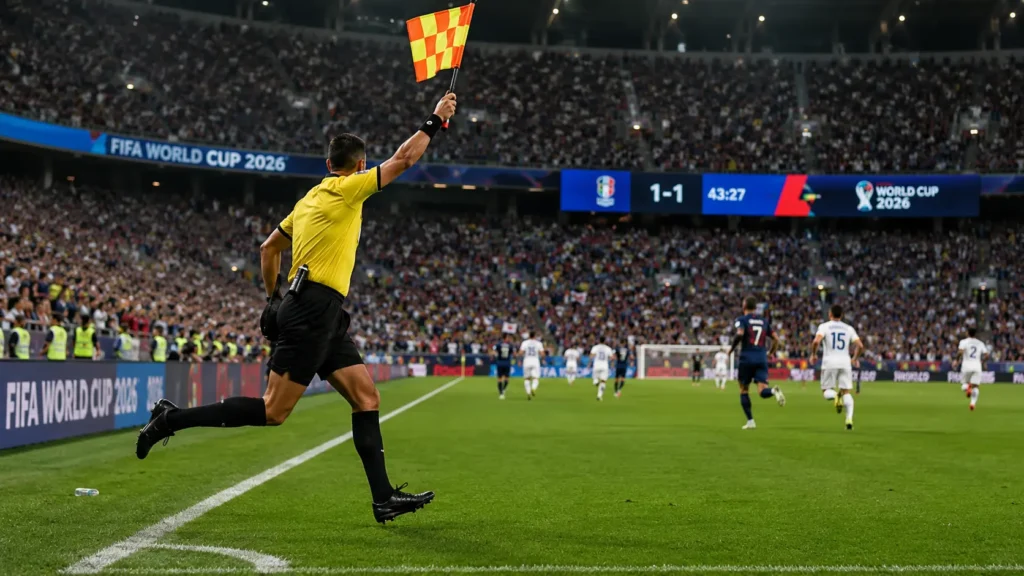
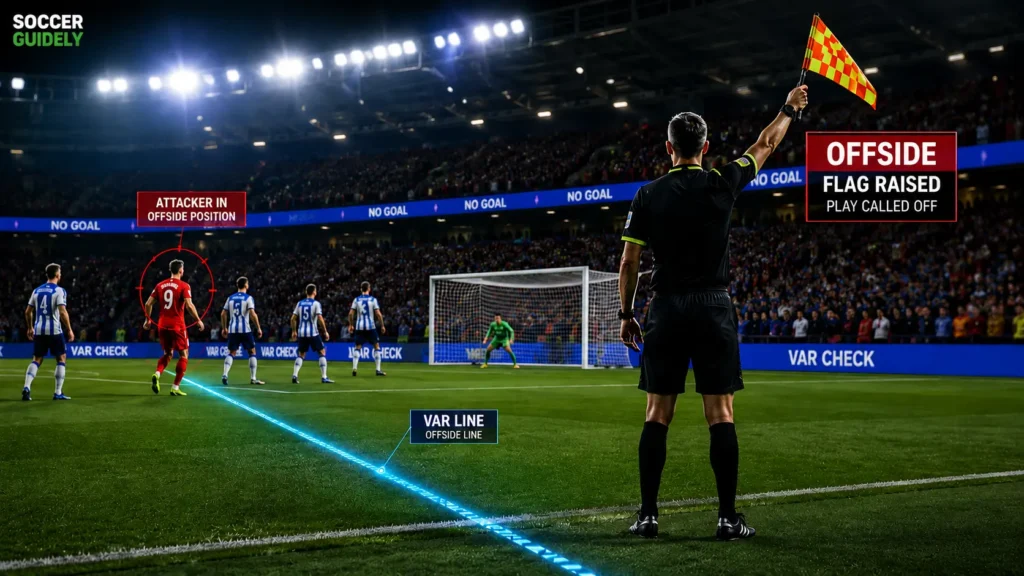
Even the basic on-field mechanics are identical. Assistant referees position themselves level with the second-to-last defender and signal offside calls with the exact same flag system, whether they’re working a USWNT match or a men’s international friendly. Nothing about how the rule gets enforced changes based on which league is playing.
What most American fans don’t realize is that NWSL has actually seen real, measurable growth recently, which makes this question more relevant than ever. According to NWSL’s own reporting, the league drew over 2 million total spectators across a recent regular season, with average attendance topping 11,000 per match. That’s a lot of Americans watching this exact rule in action every single week, not just during World Cup summers.
Here’s something broadcasters know that fans don’t. In NWSL’s earlier broadcast seasons, commentary teams frequently spent extra airtime explaining the offside rule during broadcasts specifically because the league’s audience skewed toward newer soccer fans discovering the sport through the women’s game first, often before ever watching a men’s match. That wasn’t because the rule needed extra explaining for a women’s league, it was a direct response to who was actually in the audience.
As NWSL’s audience has grown and become more soccer-literate over recent seasons, reflected in that jump to over 2 million total spectators and 11,000-plus average attendance, broadcasters have gradually shifted toward assuming more baseline rules knowledge, the same evolution men’s league broadcasts went through decades earlier as their own audiences matured. It’s a good reminder that how much a broadcast explains a rule says a lot more about the audience’s experience level than about the rule itself.
What Happens When You Ask an AI Assistant This Question?
This is exactly the kind of question a lot of people now type into an AI assistant instead of searching the old-fashioned way, something like “is offside different in women’s soccer” typed straight into ChatGPT, Google’s AI Overview, or Perplexity. That’s a genuinely reasonable way to look this up.
Here’s the good news. The answer doesn’t change depending on where you ask it. Whether you’re reading this article, asking an AI chatbot, or pulling up IFAB’s official Laws of the Game directly, the answer is the same, because it’s not a matter of opinion or interpretation. It’s one shared rulebook, and any accurate source, human-written or AI-generated, is going to tell you the same thing. If an answer ever tells you otherwise, that’s worth double-checking against IFAB’s official rules directly.
Why Does This Matter for American Fans Watching Both Leagues?
With the 2026 World Cup bringing a massive wave of new soccer interest to the US, a lot of fans are going to be watching both men’s and women’s soccer for the first time, sometimes in the very same summer. Knowing that the rules genuinely don’t change between the two means switching from a USWNT match to a USMNT match, or from NWSL to MLS, doesn’t require learning anything new.
That relevance doesn’t end when the 2026 tournament wraps up either. With the 2027 Women’s World Cup already on the calendar, this same rule knowledge carries forward directly, no updates needed, no new version to learn between now and then.
That consistency is honestly one of the more underrated things about soccer as a sport. A rule you learn watching one league applies everywhere else too. Immediately. No translation needed.
Here’s the part almost nobody’s connecting for American fans this year. With the 2026 men’s World Cup landing on US soil, a huge number of Americans are going to watch men’s international soccer closely for the first time in their lives, often within months of also watching NWSL, USWNT friendlies, or college soccer coverage. That means this specific summer is genuinely the first real, large-scale test of whether Americans trust that the rule they just learned watching one competition actually holds up watching a completely different one.
This matters more than it sounds like it should. If a new fan learns offside watching NWSL in the spring, then sees what looks like a differently-applied call during World Cup coverage that summer, simply because the situation on screen looks unfamiliar (different broadcast graphics, different commentary style, different pace of play), that fan might wrongly conclude the rule changed, when really it’s just a different tactical context producing a different-looking situation. Understanding going in that the rule truly is one single standard, tested across literally every competition airing in the US this year, is exactly the kind of confidence that turns a confused first-time viewer into someone who actually trusts what they’re watching.
What’s the Bottom Line on Offside in Women’s Soccer?
Offside in women’s soccer is identical to offside in men’s soccer. Same governing body, same rulebook, same exact standard, same technology.
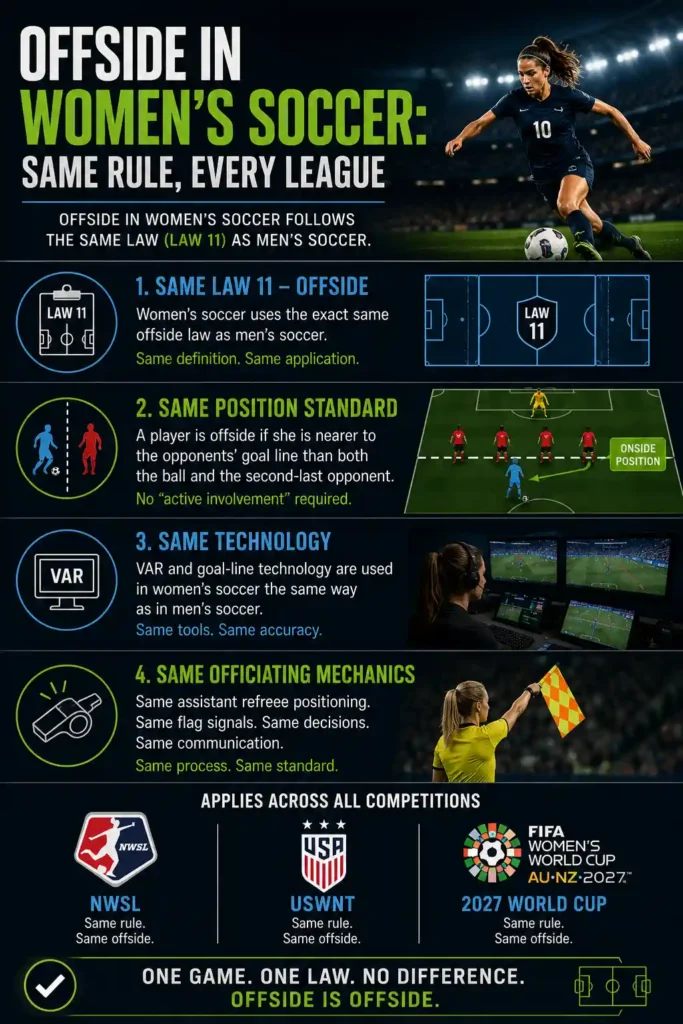
Once you understand the rule, you understand it everywhere. NWSL, USWNT, men’s leagues, the World Cup, all of it. No exceptions and no separate version to learn. For the full breakdown of the rule from the ground up, start with our complete offside rule guide.
Frequently Asked Questions About Offside in Women’s Soccer
Q1: Is the offside rule different in women’s soccer?
A: No. The offside rule in women’s soccer is identical to men’s soccer. Both are governed by the same Law 11 of the Laws of the Game, set by IFAB, with no separate rulebook, distance requirement, or timing standard for either gender.
Q2: Does NWSL use the same offside rule as MLS?
A: Yes. NWSL and MLS both follow the same Law 11 offside standard, since both leagues operate under the same internationally recognized Laws of the Game. There is no separate or simplified version of the rule used in either league.
Q3: Is offside technology the same in men’s and women’s soccer?
A: Yes. The same semi-automated offside technology used at the men’s World Cup has also been used at recent Women’s World Cups, tracking player positioning with identical camera and sensor systems and applying the same offside standard.
Q4: Why do people think offside might be different in women’s soccer?
A: Many fans assume this because other sports, like basketball, have genuine rule differences between men’s and women’s leagues, such as the WNBA and NBA using different shot clocks. Soccer does not follow this pattern, since IFAB maintains one single rulebook for every level of the sport.
Q5: Will the offside rule be different at the 2027 Women’s World Cup?
A: No. The offside rule at the 2027 Women’s World Cup will follow the same Law 11 standard used at every other FIFA competition, including the men’s tournament. The rule does not change based on the competition or gender of the players.
More on the Offside Rule
- What Is Offside in Soccer, The Complete Rule Guide
- VAR Offside Decisions at the 2026 World Cup
- Offside Timing in Soccer, When Exactly Is the Call Made
- Offside Exceptions Explained
- Common Offside Myths, Debunked
Want to catch every one of these moments as they happen this summer? Our newsletter breaks down the rules and history behind the biggest plays at World Cup 2026, written for fans who are still learning the game. And if you want to keep going deeper into how offside actually works, start with our full soccer rules hub.
About This Article
All rule references verified against IFAB’s official historical archive and the current Laws of the Game, Law 11. NWSL attendance figures referenced in this article reflect a recent regular season as reported by the league. World Cup 2026 and Women’s World Cup semi-automated offside technology details verified against FIFA-adjacent reporting current as of July 2026. Reviewed for accuracy before publication by the SoccerGuidely Editorial Team.