Written by the SoccerGuidely Editorial Team. Covering soccer rules and history for American fans ahead of the 2026 World Cup. Last updated: July 2026. Verified against IFAB’s historical archive and Laws of the Game.
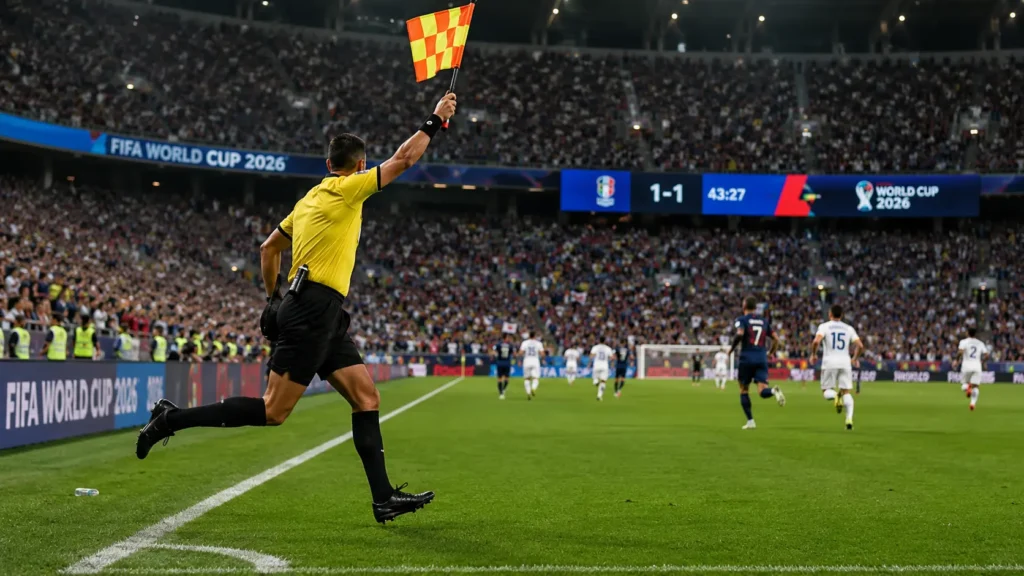
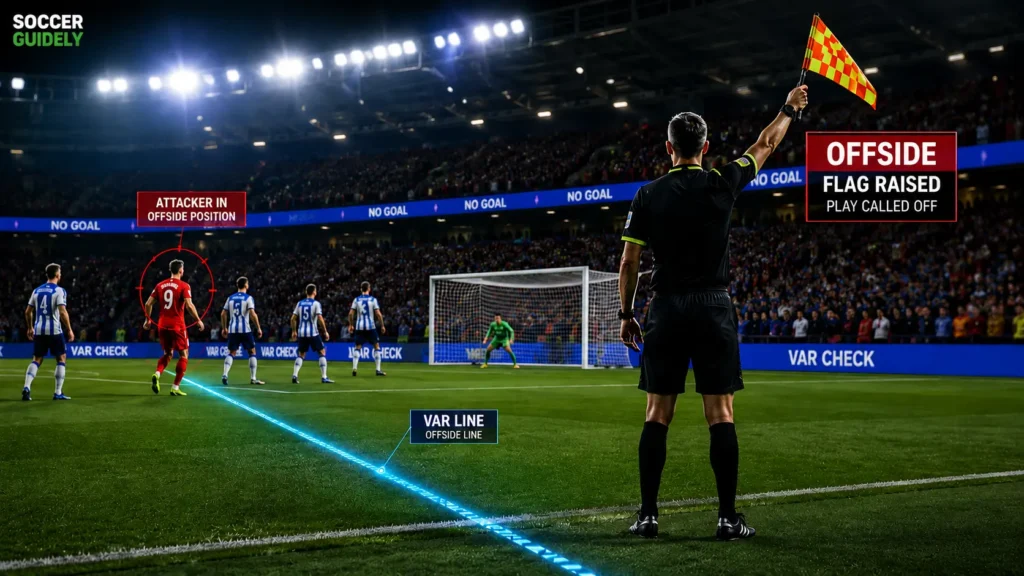
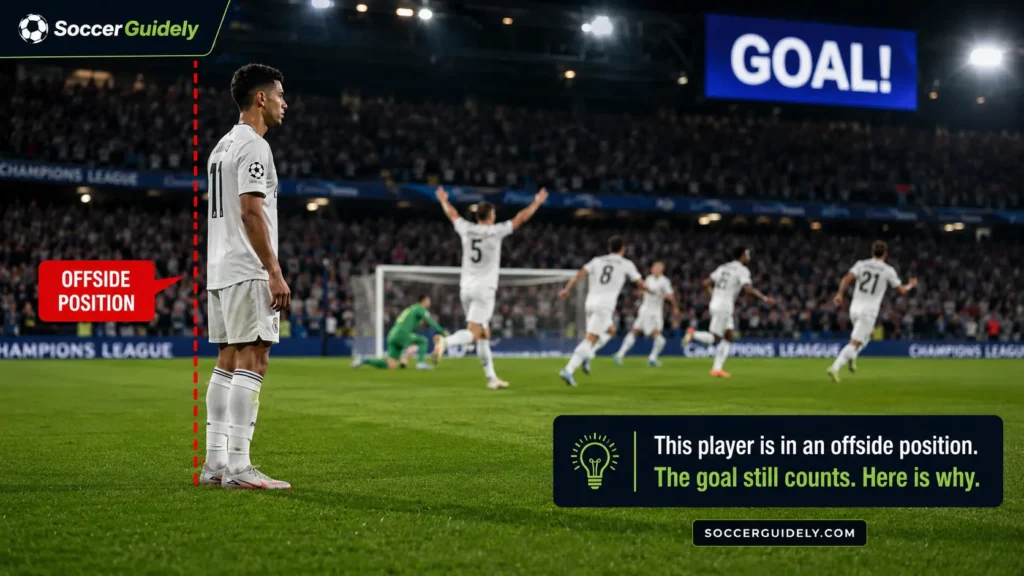
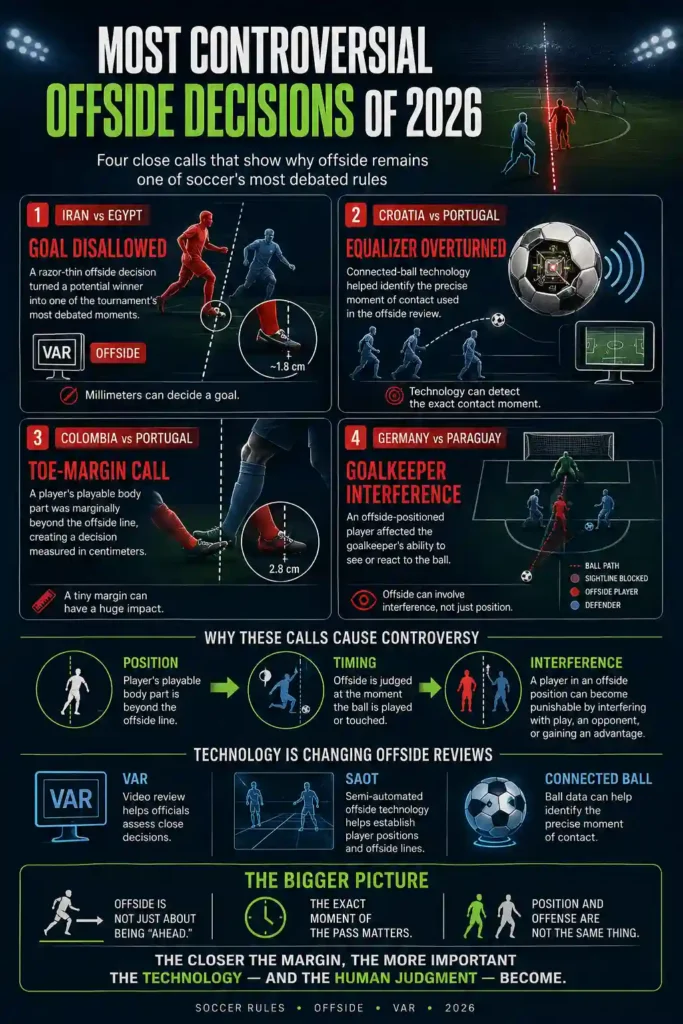
The most controversial offside decisions usually involve calls decided by mere centimeters, moments where a goal gets disallowed by a margin so small that fans feel robbed even when the call is technically correct. At the 2026 World Cup, several offside decisions have sparked major debate, including a toe-margin call that eliminated Iran and a Connected Ball Technology overturn that disallowed a Croatia equalizer. These calls highlight the tension between precision and emotion in modern officiating.
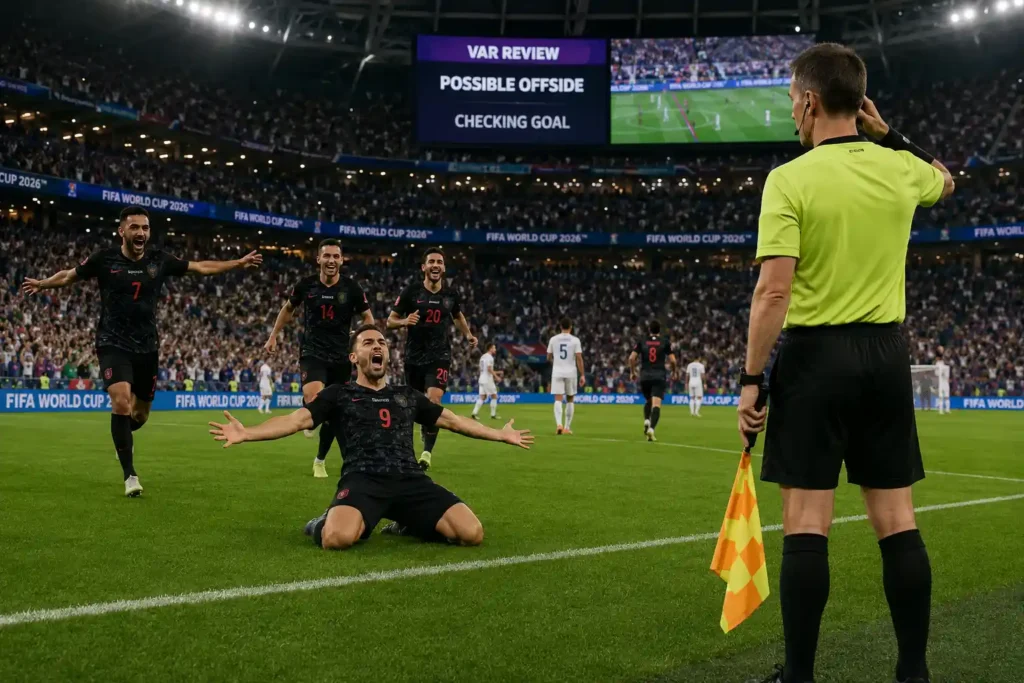
A player pokes in a last-minute winner. His shirt comes off. His teammates pile on top of him, and his whole country is about to celebrate.
Then a graphic appears showing his toe was offside by less than an inch. And just like that, the goal is gone.
Some of the most controversial offside decisions in soccer history look exactly like this. Correct by the rulebook. Brutal to actually watch. Here’s why they happen, and why they’re not going anywhere.
What Made Iran’s Disallowed Winner Against Egypt So Controversial?
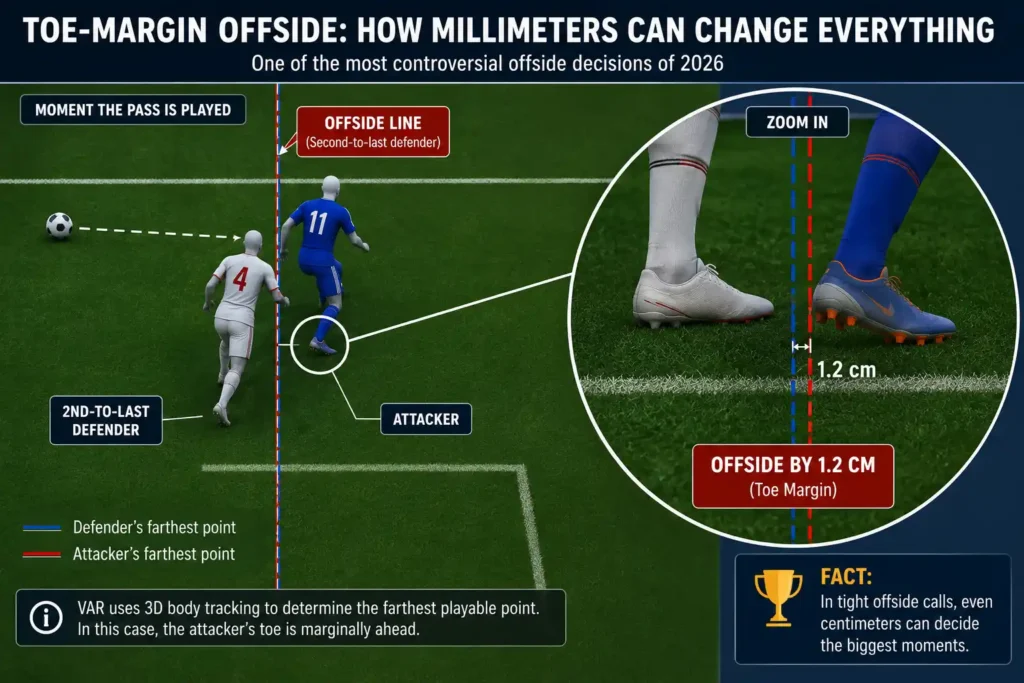
In the final minutes of Iran’s must-win group stage match against Egypt, defender Shoja Khalilzadeh poked home what looked like a stunning, last-gasp winner. The celebration was pure joy. Shirts came off. Teammates piled on top of him in the corner.
Then VAR stepped in.
Replay showed Khalilzadeh had been offside by the narrowest of margins. A toe. The goal was disallowed, and Iran’s World Cup ended right there. It’s the kind of moment that makes you want to scream at the technology, but by the letter of the rule, the call was correct. Under Law 11 of the Laws of the Game, any offside position counts, no matter how small the margin. A toe offside is still offside, whether that feels fair or not.
How Did Connected Ball Technology Disallow Croatia’s Equalizer?
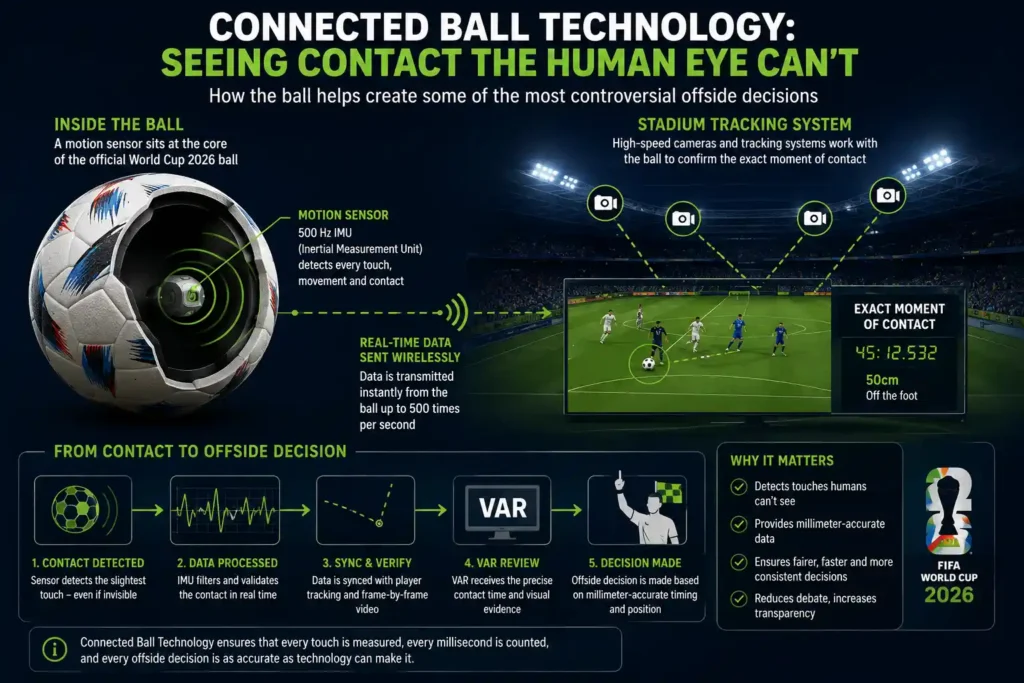
A sensor embedded inside the match ball detected a touch invisible to the naked eye, proving a Croatia player had gotten the faintest contact on the ball moments before it reached the eventual goalscorer.
Trailing Portugal 2-1 deep into a round of 16 match, Croatia thought they’d equalized when Joško Gvardiol bundled home a deflected cross. Wild celebrations followed. Then officials reviewed the play using Connected Ball Technology, and discovered that a Croatia striker had gotten the faintest touch on the ball just before it reached Gvardiol, putting him in an offside position when it mattered.
It’s worth knowing the difference here, since these two technologies work together but aren’t the same thing. Semi-automated tracking uses cameras to monitor where players’ bodies are on the field. Connected Ball Technology is different, it’s a sensor physically inside the match ball itself, detecting the exact moment of contact even when no camera angle can see it clearly. In this case, the ball sensor is what caught the touch, not the camera system.
This wasn’t a human eye making a judgment call. It was a sensor inside the ball detecting contact that no camera angle could’ve shown clearly. The technology essentially became the semi-automated offside technology used at this tournament‘s clearest proof point, and the goal was rightly wiped out, even though it broke hearts in the process.
Why Do These Calls Feel So Much Worse Than They Used To?
These calls aren’t happening because officiating got worse, they’re happening because the technology got precise enough to catch margins that were always technically offside but previously invisible to the human eye.
Here’s the thing about modern offside controversy. It’s not that the calls are getting more wrong. It’s that they’re getting more precise. A decade ago, a toe-margin offside like Iran’s would likely have gone uncalled entirely, because no linesman could physically see a gap that small in real time. Now, semi-automated tracking and ball-sensor technology catch margins the human eye never could.
This creates a strange emotional experience for fans. The calls are more accurate than ever. But they also feel crueler, because a goal that would’ve stood ten years ago now gets wiped out by a margin smaller than a shoelace.
It’s worth being honest, though, not every controversial offside call in recent memory has actually been correct. In 2023, English officiating body PGMOL publicly admitted that Liverpool’s Luis Díaz had a legitimate goal wrongly disallowed for offside against Tottenham, a case where the VAR official actually confirmed onside internally but the correction never reached the referee in time. That’s a genuinely different kind of controversy than Iran’s or Croatia’s, a real human and communication error, not a harsh-but-correct measurement. Both types happen. It’s fair for fans to be frustrated by inconsistency in how carefully different matches and different reviews get handled, even while accepting that any one individual call, like Iran’s or Croatia’s, was correct under the rules.
Look, imagine watching this play out live. You’re at a watch party, the ball trickles in, everyone’s screaming, high-fiving strangers who are basically family now. Thirty seconds later, a graphic appears on screen showing a paper-thin gap between an attacker’s toe and a defender’s leg, and the whole room goes dead silent as the celebration gets ripped away. That whiplash, joy to silence in under a minute, is exactly what makes these calls so much more painful than a routine, obvious offside flag that goes up before anyone even starts celebrating.
What most fans don’t realize is that offside and penalty controversies aren’t actually reviewed the same way at all, even though they feel like the same kind of VAR drama in the moment. Offside is treated as a factual, measurable decision. The semi-automated system captures body position data and essentially just confirms what already happened, which is why the referee typically never even walks over to the pitchside monitor for an offside call. The graphic tells the story, and that’s that.
A penalty controversy works completely differently. Because it hinges on interpretation, intent, and force, the on-field referee is required to personally walk over and view the replay before making a final call. This explains something that confuses a lot of first-time World Cup viewers, why some controversial moments get resolved in seconds with just a graphic on screen, while others turn into a multi-minute delay with the referee jogging over to a screen on the sideline. It’s not randomness. Offside is a measurement. A penalty is a judgment call the referee has to personally own, and the review process reflects that difference deliberately.
Here’s something coaches know that fans don’t. After a tournament produces multiple toe-margin offside eliminations like Iran’s and Colombia’s, coaching staffs across the board start adjusting attacking instructions in response, not to the letter of the rule, which hasn’t changed, but to the level of precision now enforcing it. Strikers are being coached to deliberately delay their final run by a fraction of a second longer than they might have a few years ago, sacrificing a small amount of separation from the defender in exchange for a much larger safety margin against a millimeter-level review.
This is a direct tactical response to exactly the kind of technology-driven controversy covered here. A run that would’ve been considered smart, aggressive timing in 2018 is now considered borderline reckless in 2026, because a margin that used to be functionally invisible is now something a sensor inside the ball can catch. Watching this tournament, you’ll notice fewer strikers trying to shave it as close as possible to the defender, and that’s not coincidence, that’s coaching staffs directly reacting to the same controversies fans have been arguing about online.
How Does This Compare to Instant Replay Controversy in American Sports?
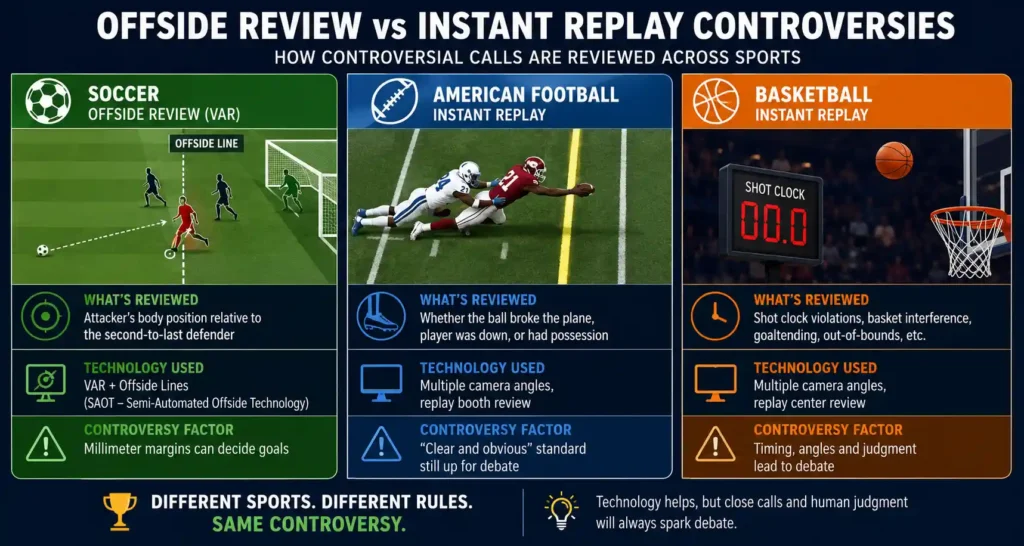
American fans actually have a decent frame of reference for this feeling. Think about an NFL catch that gets overturned by replay because a fingertip grazed the ground before full possession. Or a basketball buzzer-beater waved off because the shot clock hit zero a tenth of a second early. Same emotional whiplash. Something looked like it counted, then a review takes it away over a margin nobody could see with the naked eye.
The difference is that soccer’s offside reviews now happen constantly. Every single goal gets checked, not just the obviously close ones, which means this exact emotional rollercoaster is going to happen over and over throughout the World Cup.
Quick side-by-side of how these review moments actually compare across sports:
| Sport | What Gets Reviewed | What Decides the Call |
|---|---|---|
| Soccer (offside) | Every goal, automatically | Body position at the moment the ball is played |
| Football (catch/possession) | Coach’s challenge or booth review | Full possession before ground contact |
| Basketball (buzzer-beater) | Automatic clock review | Shot release before the clock hits zero |
What Happened With the Germany vs. Paraguay Goalkeeper Interference Call?
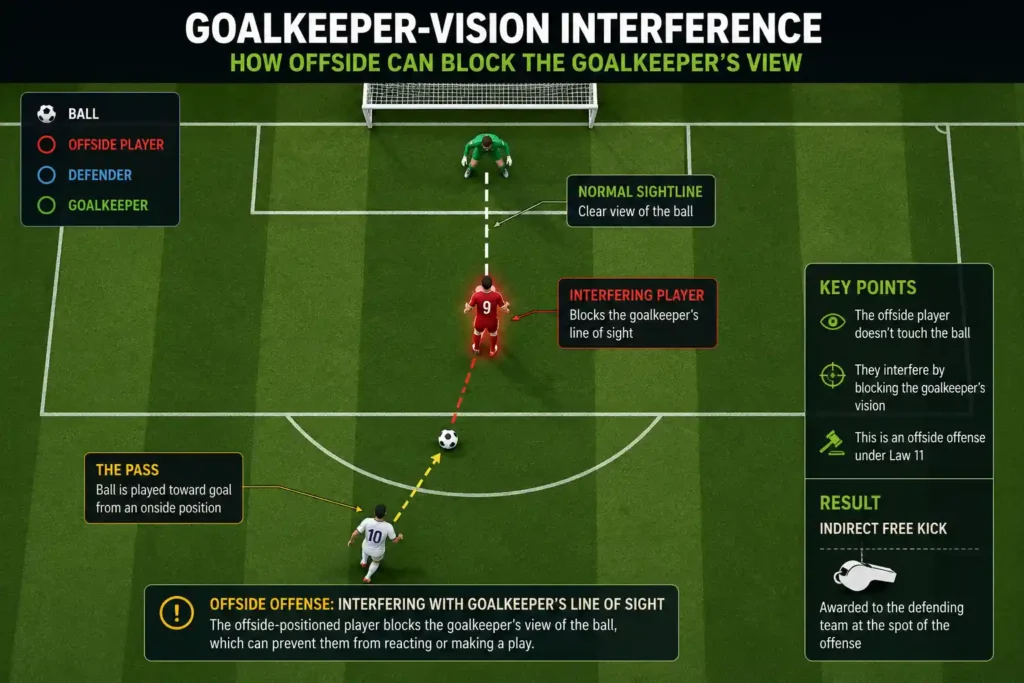
Germany’s Jonathan Tah had a goal disallowed after officials ruled a teammate blocked the Paraguay goalkeeper’s line of sight while standing in an offside position, even though that teammate never touched the ball.
Not every controversial offside call is decided by inches. Some come down to judgment. During Germany’s extra-time match against Paraguay, Jonathan Tah headed in what looked like a crucial breakthrough goal. VAR flagged the play for review, and officials determined that a Germany player had blocked the goalkeeper’s ability to see and react to the shot while standing in an offside position, even though he never touched the ball.
This type of call draws even more controversy than a toe-margin decision, because it requires a judgment call about whether the goalkeeper’s vision was genuinely affected, not just a measurement. We’ve seen this exact type of goalkeeper-vision dispute spark arguments in league play too, it’s genuinely one of the most subjective calls left in modern officiating, since two people can watch the same replay and reasonably disagree about how much the goalkeeper’s view was actually affected. Germany went on to lose the match in a shootout, adding a brutal exclamation point to the disallowed goal.
A common mistake fans make watching this exact type of call is assuming the player has to touch the ball to get flagged. He doesn’t. Simply standing in a spot that blocks the goalkeeper’s ability to see and react to the shot is enough, and that distinction confuses new fans constantly, since it feels like nothing actually happened on the field.
Here’s the part almost nobody’s connecting for American fans watching this tournament. As Connected Ball Technology and semi-automated tracking make measurement-based offside calls, like Iran’s and Croatia’s, essentially unarguable, the goalkeeper-vision interference calls, like the Germany-Paraguay incident, are actually becoming the last genuinely contestable category of offside controversy left in the sport.
That’s because a goalkeeper’s actual sightline can’t be captured by GPS-style tracking data the same way body position can. It still requires a human judgment about what the goalkeeper could plausibly see and react to, which means as this tournament progresses, expect goalkeeper-vision disputes specifically to dominate the remaining offside controversy conversation, even as toe-margin arguments fade because the sensor data settles them almost instantly. For American fans getting used to soccer’s officiating this summer, that’s a useful pattern to recognize, when you see an offside argument that drags on and gets genuinely debated by pundits afterward, rather than settled in seconds by a graphic, there’s a good chance it’s a vision-interference call, not a measurement one.
Why Do These Controversies Matter for American Fans New to the Sport?
With the World Cup being played on US soil, millions of Americans are watching these exact controversies unfold in real time, many for the first time. According to reporting from Sports Illustrated and Al Jazeera, the 2026 tournament has already produced multiple offside decisions significant enough to eliminate teams from the competition entirely, including Iran’s toe-margin heartbreak against Egypt and a nearly identical toe-offside call that wiped out a stoppage-time winner for Colombia against Portugal, which tells you just how high the stakes are on these razor-thin calls.
What most American fans don’t realize is that these controversial moments are actually a sign the system is working as designed, not a sign it’s broken. According to FIFA, the semi-automated offside technology used at this tournament tracks player positioning with a level of precision no previous World Cup has had access to, which means more of these tiny-margin calls are going to surface, not fewer.
Understanding that these calls are usually technically correct, even when they feel devastating, is the difference between actually learning the sport and just being frustrated by it every time a goal gets wiped out. And it’s not just a World Cup thing either, these same types of calls, both the razor-thin measurements and the subjective goalkeeper-vision judgments, happen in MLS and NWSL matches every season too, just without the ball-sensor technology this tournament has access to.
What’s the Bottom Line on Controversial Offside Decisions?
The most controversial offside decisions almost always come down to two things. Razor-thin margins that technology can now catch but the human eye never could. And judgment calls about interference that require officials to make a subjective read in real time.
Both types are going to keep generating headlines, arguments, and heartbreak. But understanding why they happen makes watching a whole lot less frustrating, and honestly, a lot more interesting too. For the full breakdown of the rule from the ground up, start with our complete offside rule guide.
Frequently Asked Questions About Controversial Offside Calls
Q1: Was Iran’s disallowed goal against Egypt actually offside?
A: Yes. Video review showed Iran’s Shoja Khalilzadeh was offside by a toe-margin when the ball was played during their 2026 World Cup group stage match. Despite the heartbreak of the disallowed goal, the call was technically correct under Law 11 of the Laws of the Game.
Q2: What is Connected Ball Technology in soccer?
A: Connected Ball Technology is a sensor embedded inside the official match ball that detects the exact moment of contact between the ball and a player, even when no camera angle can clearly show it. It works alongside camera-based tracking to help officials make precise offside decisions.
Q3: Can a player be offside without touching the ball?
A: Yes. A player can be ruled offside without touching the ball if they interfere with play, such as blocking the goalkeeper’s line of sight during a shot attempt. This type of call requires officials to make a judgment about interference rather than a simple position measurement.
Q4: Why do offside calls get reviewed faster than penalty calls?
A: Offside is treated as a factual, measurable decision based on tracking data, so the referee typically does not need to view a pitchside monitor. Penalty decisions involve judgment and interpretation, which usually requires the referee to personally review the replay before making a final call.
Q5: Has VAR ever made a wrong offside call?
A: Yes. In 2023, English officiating body PGMOL publicly admitted that Liverpool’s Luis Díaz had a legitimate goal wrongly disallowed for offside against Tottenham due to a communication error between VAR officials. Not every controversial offside decision has been correct.
More on the Offside Rule
- What Is Offside in Soccer, The Complete Rule Guide
- VAR Offside Decisions at the 2026 World Cup
- Offside in Real Match Scenarios
- Offside Timing in Soccer, When Exactly Is the Call Made
- Common Offside Myths, Debunked
Want to catch every one of these moments as they happen this summer? Our newsletter breaks down the rules and history behind the biggest plays at World Cup 2026, written for fans who are still learning the game. And if you want to keep going deeper into how offside actually works, start with our full soccer rules hub.
About This Article
All rule references verified against IFAB’s official historical archive and the current Laws of the Game, Law 11. Match details referenced in this article, including Iran vs. Egypt, Croatia vs. Portugal, Colombia vs. Portugal, and Germany vs. Paraguay, reflect publicly reported 2026 World Cup group and knockout stage results as of July 2026. The Luis Díaz VAR error is based on PGMOL’s public statement from 2023. World Cup 2026 semi-automated offside and Connected Ball Technology details verified against FIFA-adjacent reporting current as of July 2026. Reviewed for accuracy before publication by the SoccerGuidely Editorial Team.